Last Updated:
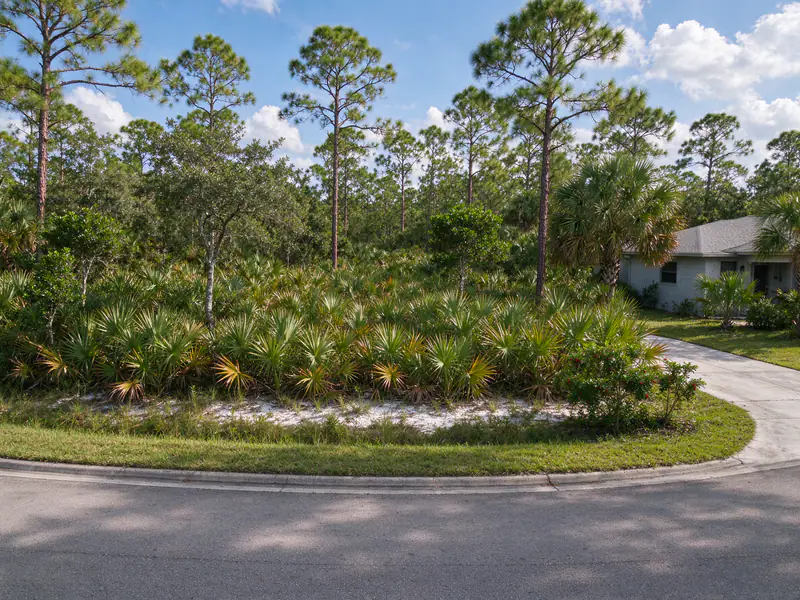
Flatwood Land Clearing Palm Bay clears residential lots across Palm Bay for new houses, from single Port Malabar lots to the larger parcels on the edges of the city. Palm Bay has about 22,155 vacant platted single-family lots, averaging 0.27 acre, according to the county property appraiser’s parcel data, and most of them are still pine flatwoods: slash pine, cabbage palm and a floor of saw palmetto. Clearing one is less about the machine than about two documents, the house plan and the city’s permit, and how the lot is opened has to satisfy both. The work is carried out by licensed and insured contractors, with the scope written before anything is cut.
What happens on the first visit
The first visit is a walk of the lot. The trees you want to keep are marked, usually the straight slash pines and cabbage palms well away from the house footprint, because every kept tree changes the permit sketch and the replacement planting the city will ask for later. The walk also looks for gopher tortoise burrows, since the Florida Fish and Wildlife Conservation Commission requires a relocation permit before any work within 25 feet of one. It checks for wet ground, which on Palm Bay’s flatwoods sand decides whether a tracked machine can work without rutting, and it checks access: the street frontage, the swale, overhead lines and whether a canal easement runs along the back line.
From that walk comes a written scope. It names the method for each part of the lot, which stumps are pulled and which are ground, and where the debris goes. If something on the lot changes the plan, such as a burrow near the pad or standing water in the driveway path, it is in the scope rather than discovered with a machine running.
Clearing to the house plan, not to bare sand
Palm Bay’s Chapter 175 tree code, adopted in September 2024, sets the order of operations. Any clearing on a residential lot under an acre needs the city’s Tree Removal and Small Residential Site Land Clearing Permit, and clearing for a new house needs the building permit already under review, with its application number on the clearing request. The application includes the recorded deed and a site sketch that shows the species and trunk diameter of every tree, which ones come out, which stay, and the replacement trees. The Palm Bay permit guide walks through the paperwork.
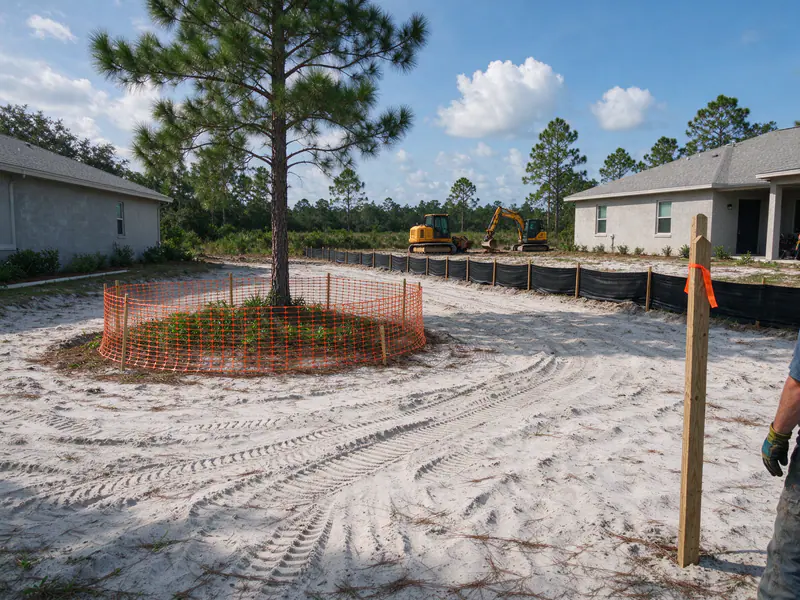
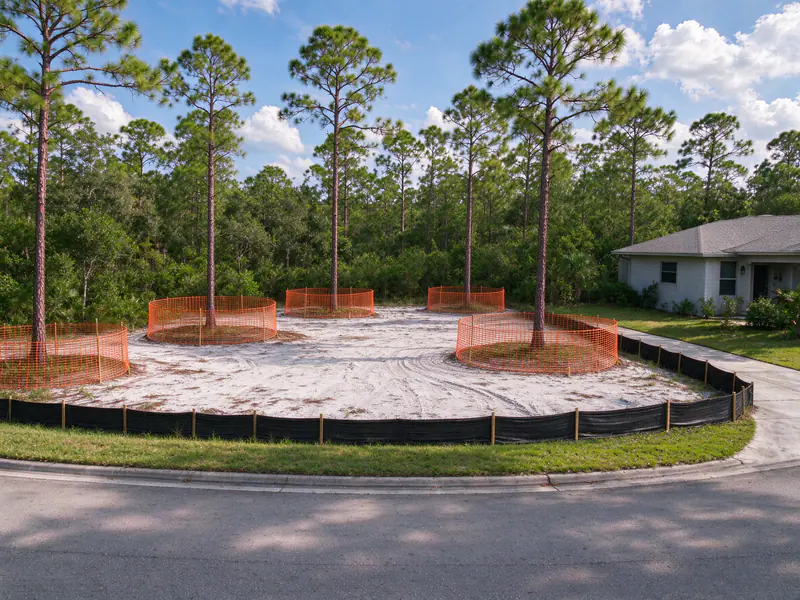
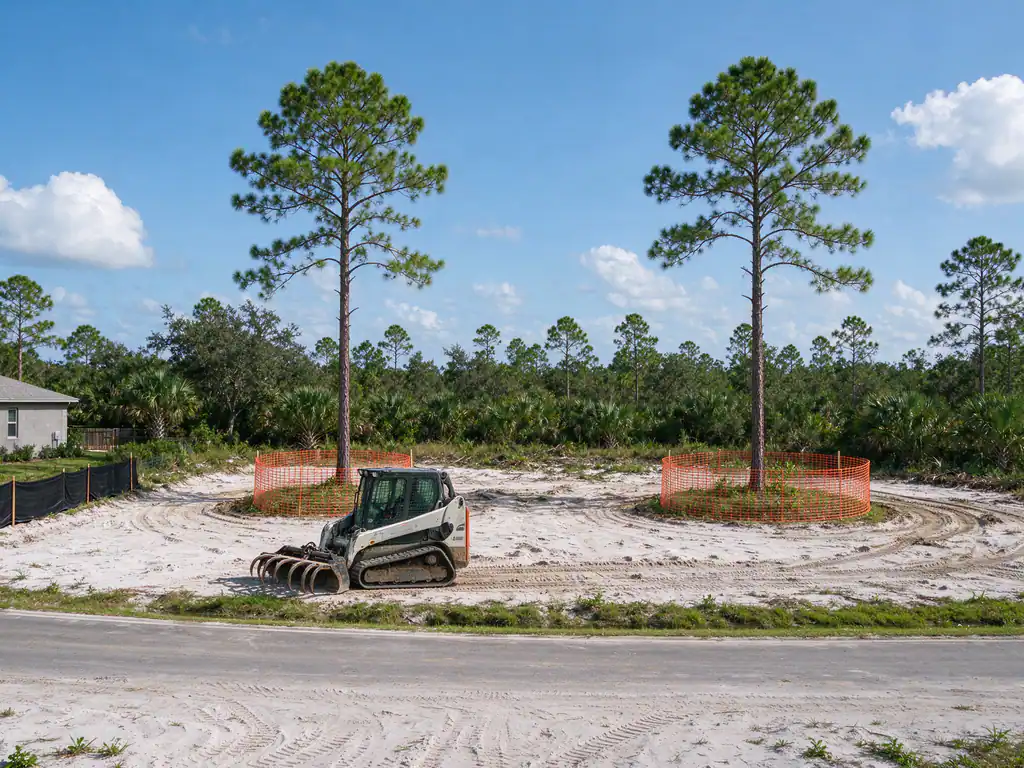
Kept trees are worth the trouble. A new home lot under an acre needs four trees and ten shrubs before the certificate of occupancy, and a kept tree of 6 to 12 inches in diameter counts as three of those four trees; one of 20 inches or more counts as five. Each one has to survive the job, so the city requires a barricade around its critical root zone, sized at 12 inches of diameter for every inch of trunk and never closer than 10 feet. Machines, fill and stacked logs stay outside it, and underbrush inside it is cleared by hand. Where you want more trees saved than the house plan allows, selective clearing is the better fit.
Mature trees inside the clearing area are felled with a planned drop zone, away from the street, the neighbor’s house and any overhead line, and everyone stays clear of both the drop zone and the machines. A dead top, a heavy lean or two crowns locked together changes how a tree is taken down. A big tree hanging over a house or the power drop is arborist rigging work, and the scope says so rather than treating it like brush.
Pad, driveway, septic and well: four different finishes
Complete lot clearing is one option, but most Palm Bay house lots are better opened by area, because each area needs a different finish.
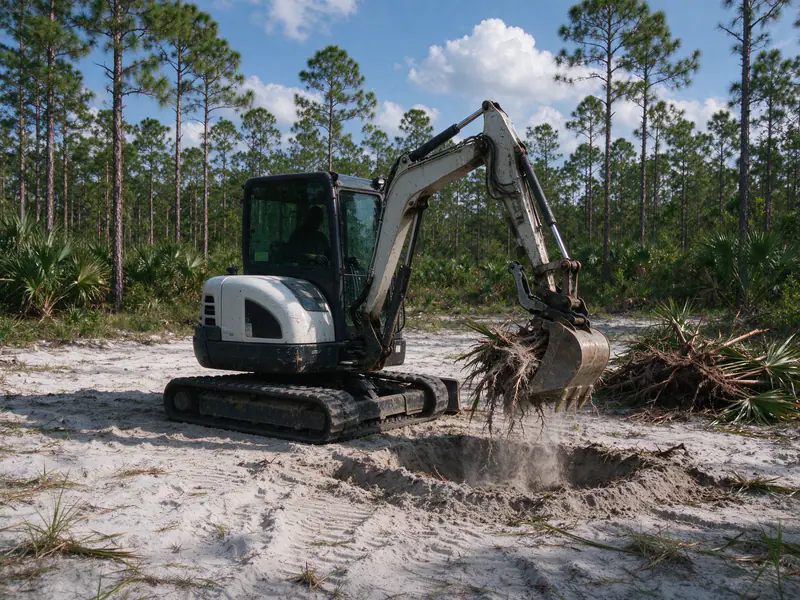
The house pad needs grubbing: stumps, roots and the buried organic layer come out so the fill and slab sit on clean sand. Roots left under fill rot and leave soft spots, which is why mulching alone is the wrong finish here. The difference is laid out in clearing vs grubbing.
The driveway corridor is cleared and grubbed to its width plus a working shoulder, from the street swale to the garage. Its line is set from the site plan, since a driveway that wanders around a kept pine is cheaper to plan than to fix.
The septic drainfield matters on lots outside city sewer, which includes whole Port Malabar units flagged in the city’s GIS as having neither city water nor sewer. Those lots need a private well and a drainfield, and the drainfield area should be cleared without being packed down by repeated machine passes. Where the well goes, the clearing leaves room for the drilling rig to reach it.
Lawn and yard areas usually need less: trees out, stumps ground below grade, and the surface left ready for sod. Grinding is cheaper than grubbing and leaves the sand in place.
Fill, grading and compaction come after clearing and belong to an earthwork contractor. The scope says where the clearing stops so the next trade starts on a known surface.
Wet sand, palmetto and pepper
Most of Palm Bay sits on poorly drained flatwoods soils. In EauGallie sand, the most common soil in the city, the wet layer rises to about 12 inches below the surface from June through November and drops to about four feet by April and May, per the USDA soil survey. That swing decides scheduling. In the wet months a tracked machine is the only sensible choice and even it can churn the pad area into soft sand, while the dry spring is the easiest ground of the year. The best time to clear land guide covers the timing trade-offs, including burn bans.
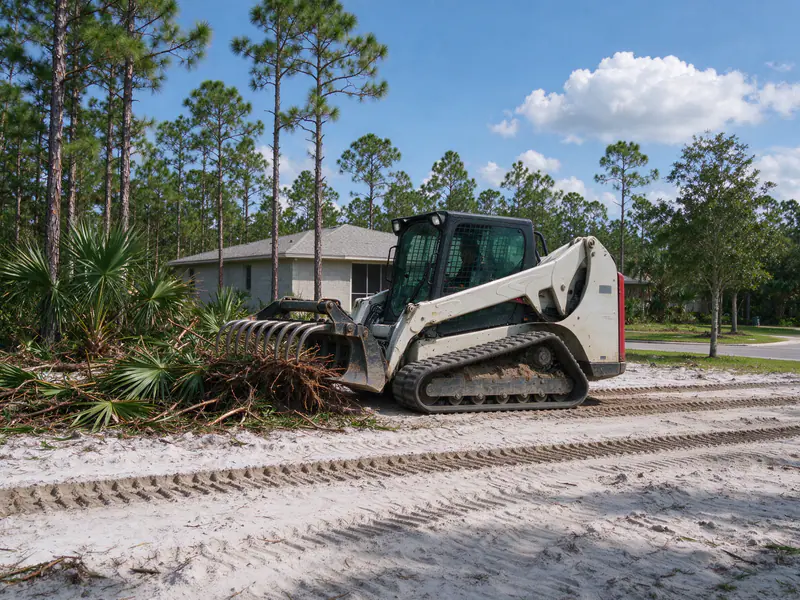
Saw palmetto is the other local factor. Its trunks run along and just under the sand, so mowing or mulching it leaves the trunks to resprout. In the building areas the root mass is grubbed out; at the edges it can be mowed back. Brazilian pepper is on Florida’s noxious weed list and Palm Bay requires Class I invasives on a property being developed to be removed before the certificate of occupancy, so on a house lot pepper comes out with its root crown even at the fence line.
Not sure which finish each part needs?
Send the house plan or a sketch of where the house, driveway and septic go, and a few phone photos. The scope starts from there.
Where the debris goes
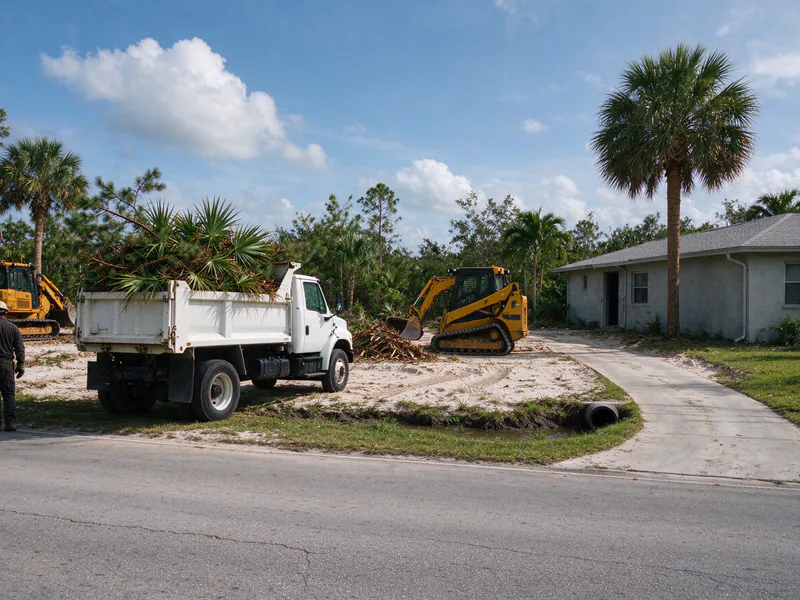
A quarter-acre lot produces a lot of wood. Burning it on site is rarely possible in Palm Bay: Florida Forest Service rules require authorization for land clearing piles and keep them at least 300 feet from any occupied building, which most Port Malabar lots cannot meet, and the city’s fire chief has banned open burning when the drought index ran high. So the debris is chipped and spread, mulched in place where the finish allows it, or loaded and hauled to a county site that accepts land clearing debris, and the choice is priced into the scope from the start. The debris hauling page covers each option. Typical costs for all of this, with what each part of the price covers, are in the Palm Bay lot clearing cost guide, and the whole sequence from buying a lot to a cleared pad is in how to clear a lot to build a house.
What a lot clearing scope includes
- A walk of the lot to mark the trees you keep and check for burrows, wet ground and access
- A written scope naming the method, the stump plan and where the debris goes
- Root zone barricades around kept trees before any machine work
- Tree felling and removal inside the areas being cleared
- Grubbing of the house pad and driveway footprint where the finish calls for it
- Stumps ground below grade where lawn will go
- Brazilian pepper and other Class I invasives removed with the root crown
- Debris chipped, mulched in place or hauled to a permitted site
- A hand-off walk of the finished lot against the scope
Three ways to clear a Palm Bay lot
| Whole lot cleared and grubbed | Building areas only | Underbrush only | |
|---|---|---|---|
| What comes out | Every tree, shrub, stump and root on the lot | Trees and roots inside the pad, driveway, septic and work space; the rest stays | Brush, palmetto and vines under the trees; no protected trees removed |
| City permit path | Tree removal and land clearing permit, with the building permit under review | Same permit, with fewer trees on the sketch | Grubbing permit, or exempt for a one- or two-family site under an acre |
| Kept-tree credit | None, so every required tree is bought and planted | Kept 6 to 12 inch trees count as three of the four required | Most trees stay and count |
| What grows back | Little in grubbed areas; sod or seed needed fast | Edges recover in the uncleared areas | Palmetto resprouts from the trunks left in the sand |
| Best fit | A tight lot where the house and septic fill most of it | Most quarter-acre home sites with a few good pines | A lot being held, sold or made walkable |
The building-area clear is the usual answer on a Palm Bay house lot. The whole-lot clear costs more in clearing and in replacement trees.
Related resources
- LearnHow to clear a Palm Bay lot to build a house
- Cost GuideWhat it costs to clear a lot in Palm Bay
- LearnLand clearing permits in Palm Bay and Brevard County
- LearnScrub-jay rules before clearing a Palm Bay lot
- LearnGopher tortoise surveys before clearing
- Decision GuideClearing vs grubbing
- LearnHow long land clearing takes
- Decision GuideClear land yourself or hire it out?
- ToolLot clearing checklist: what applies to your lot