Last Updated:
Flatwood Land Clearing Palm Bay handles brush clearing across Palm Bay and nearby Brevard towns: back yards gone wild, wooded side lots, fence lines, the strip between a house and the woods, and the understory of acreage you want to walk. Brush clearing removes what grows under and between trees, leaving the trees and the ground surface in place. In Palm Bay that growth is mostly saw palmetto, wax myrtle, gallberry, grapevine and greenbrier, pine and oak saplings, and Brazilian pepper wherever birds have dropped its seed. The work is carried out by licensed and insured contractors, and each scope says what happens to the cut material.
What happens on the first visit
The visit starts with what you want afterward, because that decides the method. An open yard you will mow, a fence line ready for a new fence, and woods thinned so you can see through them are three different jobs.
The walk sets the limits of the area and marks what stays: pines and oaks, a cabbage palm, a native shrub hedge you like. Trees with a trunk of 6 inches or more at breast height are not brush under Palm Bay’s code, so removing one needs the city’s tree removal permit even when it is buried in the thicket. Saplings that have grown past that size are marked and dealt with on the permit, or left.
It also looks at the ground. Gopher tortoises dig in the open sandy patches between palmetto, and FWC requires a relocation permit before any work within 25 feet of a burrow, so burrows are flagged before a machine moves. Overgrown back corners hide things: old fencing wire, a buried irrigation line, a septic tank lid, piles of dumped yard waste or construction scrap. Finding them on the walk keeps them out of a mower blade. If the job is mostly about hidden debris on a neglected parcel, overgrown lot clearing is the closer fit.
Choosing the tool: brush cutter, bush hog or mulcher
Brush is cleared with whatever matches its size and how close it sits to things that must not be hit.
Bush hogging, a rotary cutter pulled by a tractor or mounted on a skid steer, is the right tool for grass, weeds and young, soft brush across open ground. It is fast and cheap per acre. It is the wrong tool for mature palmetto and woody saplings. Homeowners in central Florida report six-foot palmetto breaking the shear bolts on a bush hog, and even when the cutter gets through, it knocks palmetto down without touching the trunks that make it grow back. The trade-offs are covered in forestry mulching vs bush hogging.
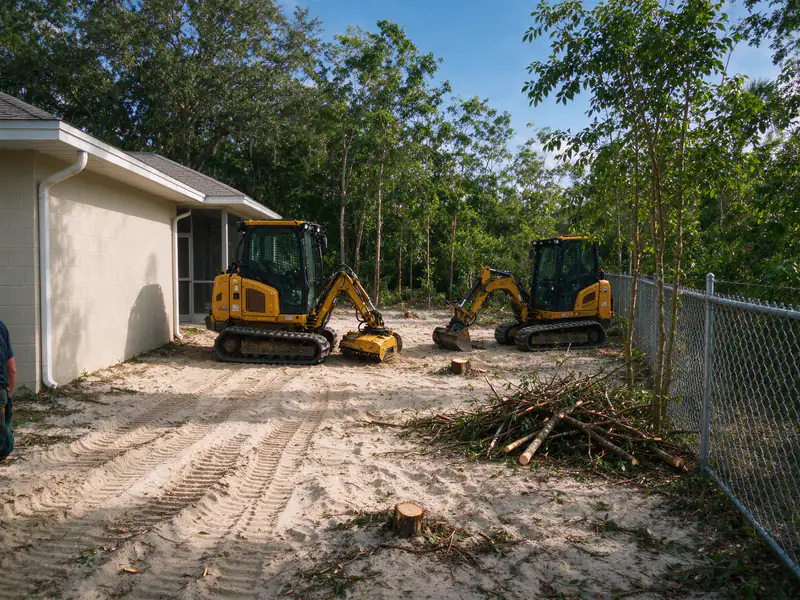
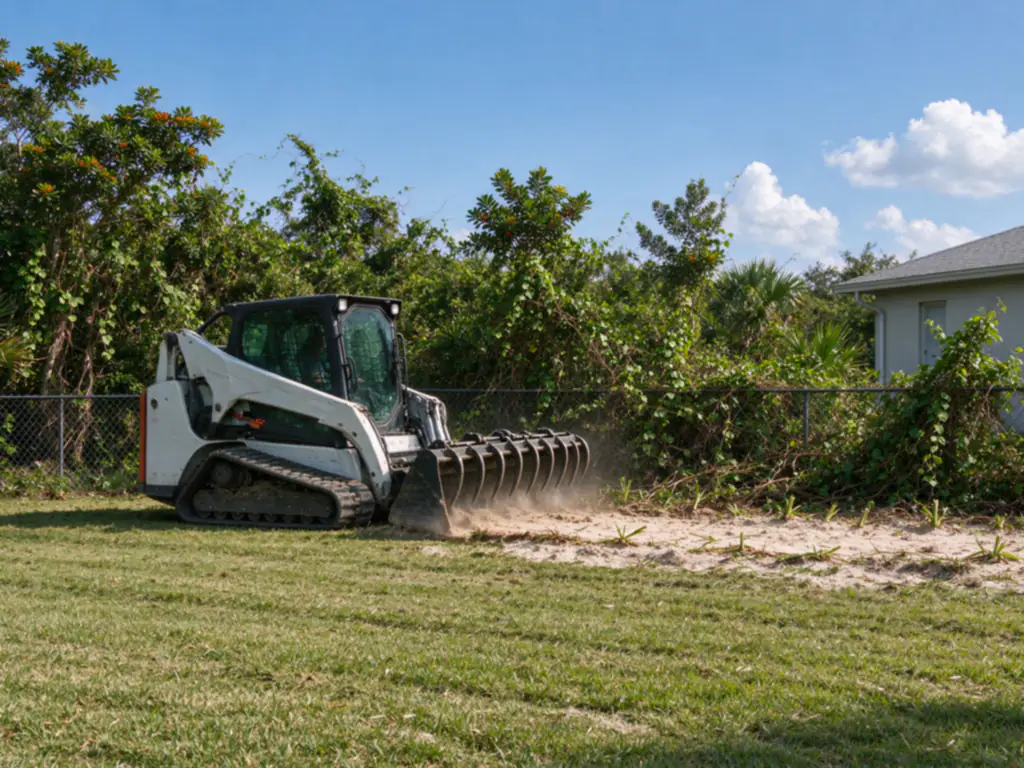
Forestry mulching handles the heavier growth: continuous mature palmetto, wax myrtle thickets and saplings up to small-tree size. The mulching head shreds it in place and leaves a chip layer, so there is nothing to haul.
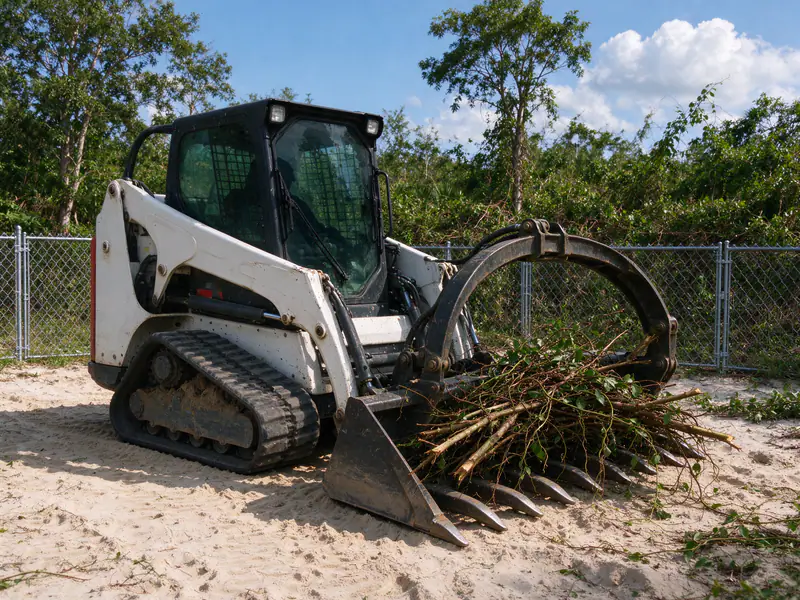
Hand tools and a grapple take over near anything fragile. Within a few feet of a fence, a house, a pool cage, a septic lid or a kept tree’s root zone, brush is cut with saws and a walk-behind or handheld brush cutter, and a skid steer with a grapple carries the cut material out. Palm Bay’s code asks that underbrush inside a kept tree’s critical root zone be cleared by hand, which settles it there. Vines go first, pulled down out of kept trees so they do not tear limbs when the brush below is cut.
Most yards end up with two methods. Mulching or mowing does the open ground, and hand cutting does the edges.
Fence lines and the strip by the house
Two brush jobs come up again and again in Palm Bay yards.
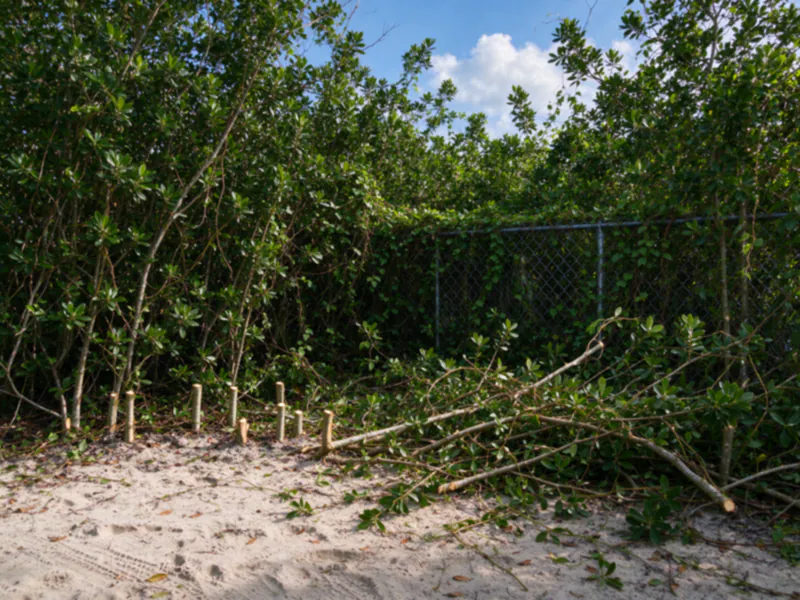
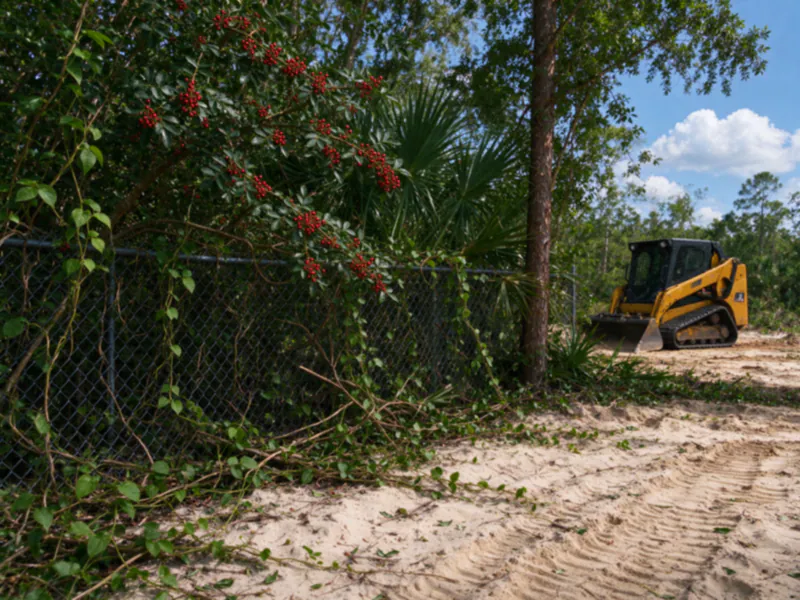
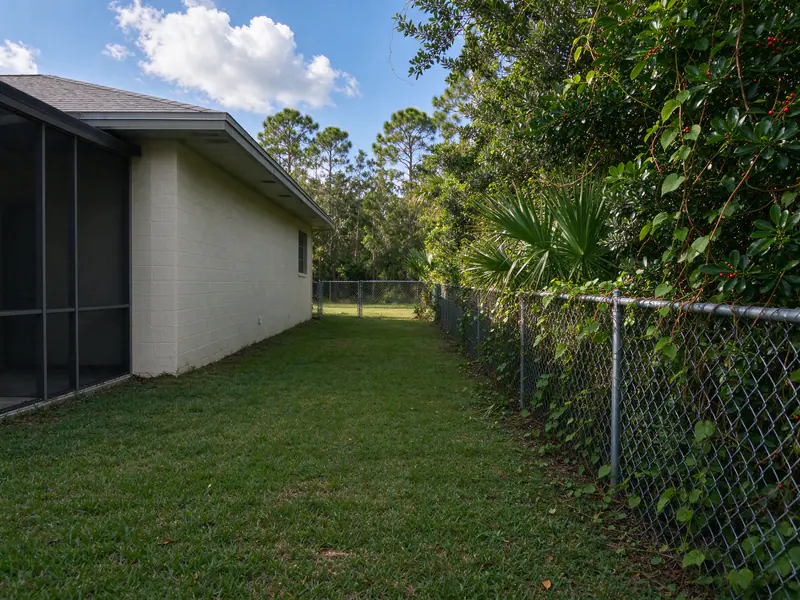
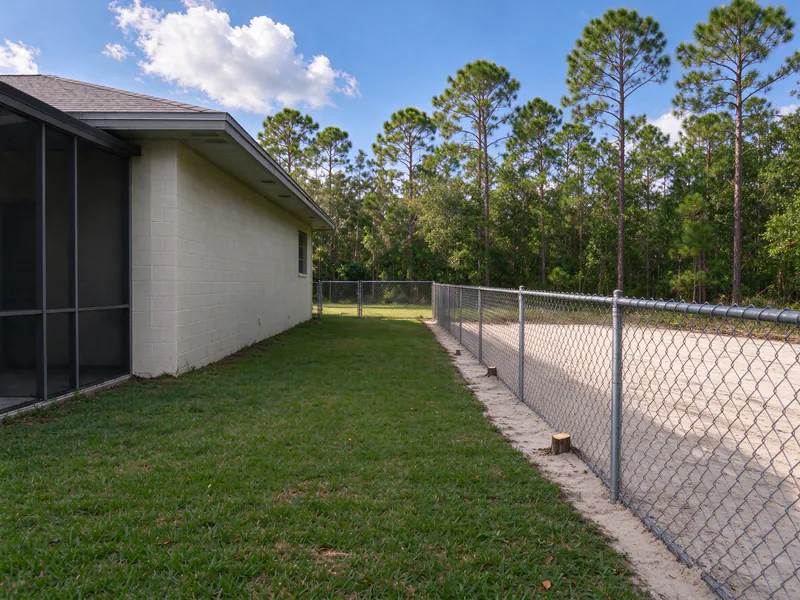
A fence line being cleared for a new fence needs a straight, open strip wide enough for the fence crew to set posts and for a mower to keep it clear later. Vines and roots along the line are pulled, small stumps on the line are ground below grade so posts can go in, and the strip is left as raked sand. The fence itself is the next trade’s work. Where the old fence line is choked with Brazilian pepper, the pepper needs its own treatment or it is back through the new fence within a season.
The strip between a house and the woods is about fire as much as looks. Palm Bay’s May 2008 Mother’s Day fires burned more than 10,000 acres, destroyed 33 homes and damaged 236, and the main fire started as a brush fire in southwest Palm Bay. Afterward, Palm Bay Fire advised clearing dense brush at least 30 feet from homes. Clearing that strip means cutting palmetto and brush back, pulling dead material out, and getting the debris off site rather than leaving a dry pile against the tree line.
Clearing a fence line or the edge of the woods?
Send a few phone photos of the strip and tell us what comes next. The scope starts from there.
Where the cut brush goes
Brush is bulky, and the plan for it is a real part of the price. Mulching leaves it on the ground as chips. Chipping turns it into a pile you can spread on beds or paths. Otherwise it is loaded and hauled to a site that accepts yard waste or land clearing debris.
Burning is limited. The Florida Forest Service allows a yard-waste pile that fits within 8 feet across to be burned without authorization, but it must sit at least 25 feet from your house and from woods or brush, 50 feet from a paved road and 150 feet from other occupied buildings. Many Palm Bay yards cannot meet that, and burn bans come in dry spells, as when Palm Bay’s fire chief banned open burning with the county’s drought index at 500. The burning debris guide covers the rules.
What brush clearing costs and what comes back
As a broad national budgeting range, brush removal runs about $800 to $3,000 per acre. A small back yard is priced by the job rather than by the acre. The price rises with mature palmetto, woody stems, vines in trees, hand work near structures, wet ground and haul-off, and falls with open, grassy growth a mower can handle. The land clearing cost per acre guide puts brush work alongside full clearing.
Brush clearing removes the tops, not the roots, so some of it returns. Palmetto resprouts from its trunks, pepper from its stumps and roots, and vines from whatever is left in the ground. Keeping a cleared area open means mowing it back as it recovers, or removing the palmetto roots where you want it gone for good. The after land clearing guide covers upkeep.
What a brush clearing scope includes
- A walk of the area to set the limits, mark plants and trees you keep, and check for burrows and hidden debris
- A written scope naming the method for each area and where the cut brush goes
- Vines pulled down out of kept trees and off fences
- Brush, palmetto and saplings cut, mowed or mulched to the agreed height
- A fence line cleared to the width a fence crew needs, where that is the goal
- Cut brush chipped, mulched in place or loaded and hauled
- A hand-off walk of the cleared area, with regrowth expectations stated
Three ways to clear brush
| Bush hogging | Forestry mulching | Cut and haul | |
|---|---|---|---|
| Growth it suits | Grass, weeds, young brush and soft saplings | Mature palmetto, woody brush, vines and small trees | Brush next to houses, fences, pools and septic areas |
| What is left | Cut stems lying on the ground | A chip layer over the sand | Clean ground, raked |
| Machine | Rotary cutter on a tractor or skid steer | Mulching head on a tracked carrier | Saws, brush cutter, skid steer with grapple |
| Weak point | Stalls and breaks shear bolts on tall palmetto | Too much chip layer for lawn without raking | Slower and carries disposal cost |
| Regrowth | Fast; roots untouched | Palmetto and pepper resprout; seedlings slowed | Roots untouched unless grubbed |
Many yards need two methods: mulching or mowing in the open, and hand cutting and hauling within a few feet of a fence or house.