Last Updated:
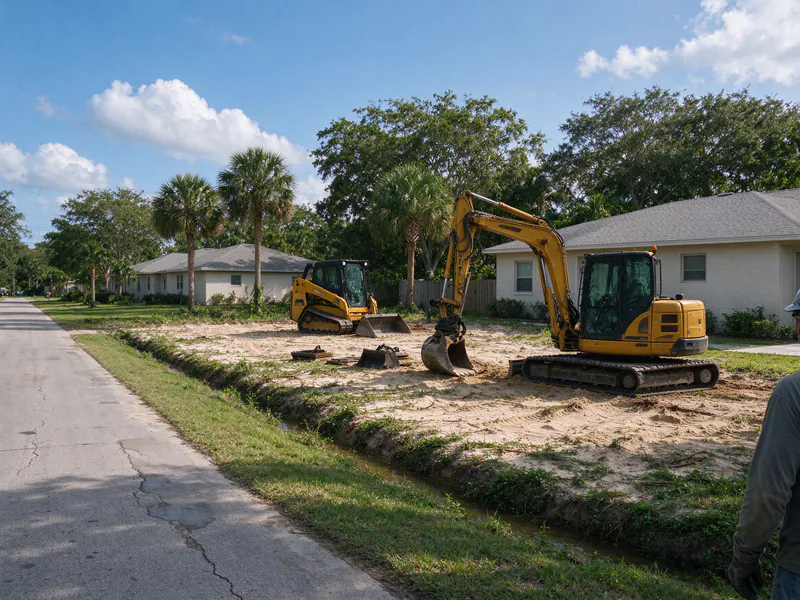
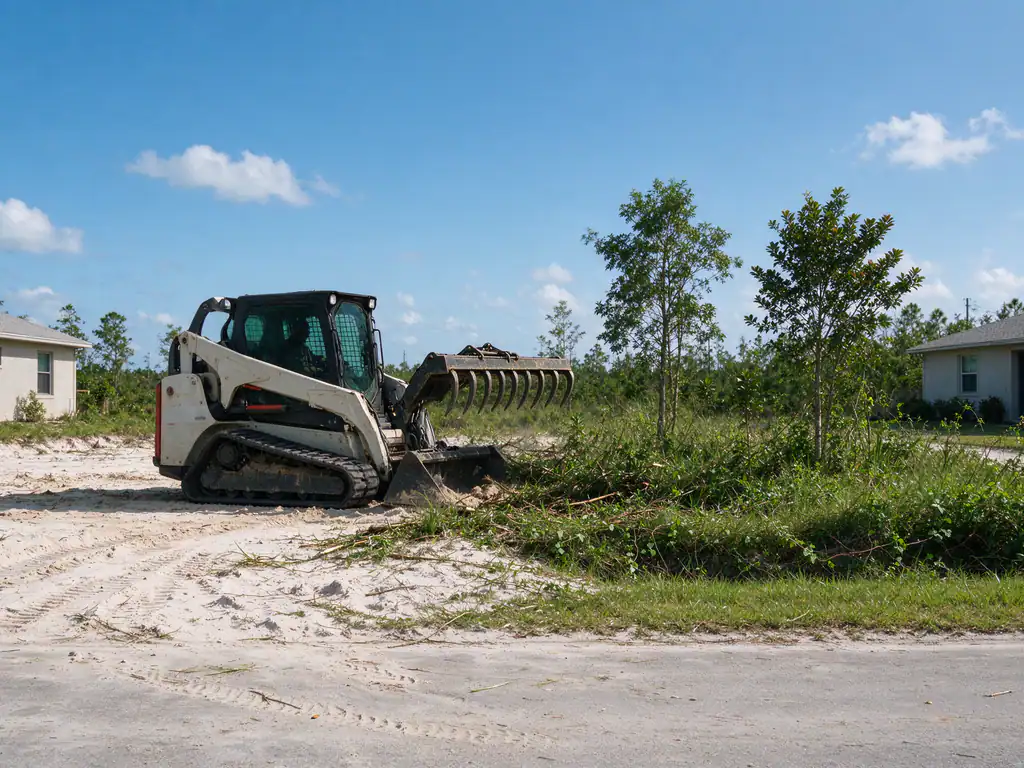
Flatwood Land Clearing Palm Bay handles overgrown lot clearing across Palm Bay: vacant lots gone wild between houses, lots bought years ago and never visited, and the back half of a property nobody has mowed. Overgrown lot clearing brings a lot back under control by cutting down the growth and getting the debris out, without the tree removal and grubbing of clearing for a house. Palm Bay has about 22,155 vacant platted single-family lots, according to county parcel data, and 10,627 of the vacant platted lots in south Brevard sit in ZIP 32908 alone. The city also has 53,329 single-family homes on lots of about the same size, so a vacant lot usually has neighbors on both sides. The work is carried out by licensed and insured contractors.
What happens on the first visit
The visit starts with any notice you received. If the city has written to you about the lot, the notice sets the deadline and describes what needs fixing, so the scope is built to answer it. The visit can follow your photos rather than precede them: an owner who lives elsewhere can start a scope from the address and a few pictures.
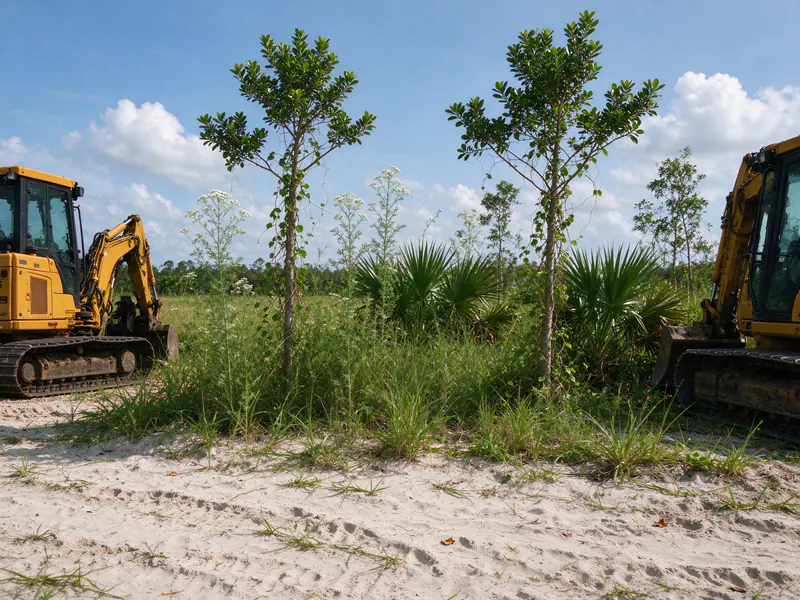
On the lot, the walk sorts the growth. Grass, weeds, vines and soft brush can be mowed or mulched. Saplings that have grown into trees of 6 inches or more at breast height are flagged, because on a Palm Bay residential lot those are on the city’s tree removal permit no matter how the lot got that way. The walk looks for gopher tortoise burrows in the open sand, and checks the lot lines so a neighbor’s fence, shed or garden is not cut into. On a lot in mapped scrub-jay habitat, the city’s federal permit limits clearing in nesting season, and the window is confirmed with the city.
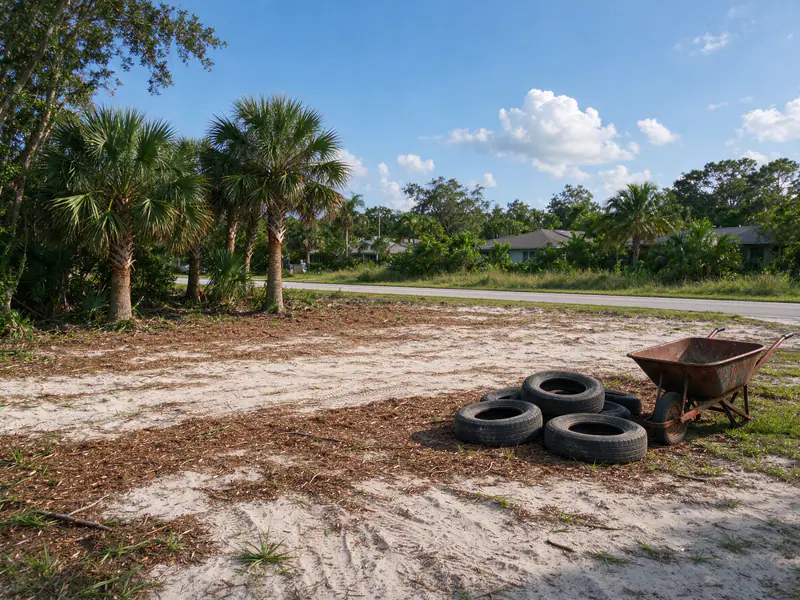
Above all it looks for what is hidden. An overgrown lot can hold dumped yard waste, tires, old fencing, furniture or construction scrap, and sometimes a forgotten foundation or well casing. Finding them on foot keeps them out of the cutter and puts their disposal in the price.
If a notice carries a deadline, say so on the first call and give the date. The scope can put first what neighbors and the street see: the frontage, the swale and the strips along the side lines. The back of the lot, wet corners and anything that needs the city’s permit follow once that is settled. Summer rain on Palm Bay’s flatwoods sand can leave a vacant lot too soft for a machine for days, which is worth knowing before a deadline gets close.
A code notice is not a clearing permit
This is the point that catches owners out. A notice asks you to clean up a lot. It does not give permission to clear it.
Palm Bay’s Chapter 175 draws the lines. Removing underbrush counts as grubbing, and one- and two-family residential sites under an acre are exempt from the grubbing permit, as is any area of a quarter acre or less. Removing any tree with a trunk of 6 inches or more at breast height, or a palm with 4.5 feet of clear wood, needs the tree removal permit, and any land clearing on a residential lot under an acre falls under that same permit. Clearing for a new house also needs the building permit already under review.
If a lot is cleared without the permit it needed, the city can issue a stop-work order or violation notice. The owner then has a week to apply at double the normal fee, may need a restoration plan, and where a lot was cleared so thoroughly that little evidence is left, faces four restoration trees for every quarter acre disturbed or the matching mitigation fees. Answering one notice by creating a bigger violation is an expensive mistake. So an overgrown-lot scope cuts the growth, removes the junk, and leaves trees of permit size standing unless the permit is in hand. The Palm Bay permit guide covers the permits, and whether a particular cleanup counts as land clearing is confirmed with the city per address.
This page does not restate Palm Bay’s vacant lot maintenance standard; that is set in the city’s code and on any notice the city sends. Rules nearby show the pattern. Rockledge requires vacant lots to keep growth at 12 inches or less in a 10-foot strip along neighbors, sidewalks and streets.
Have a notice with a deadline?
Send the notice, the address and a few phone photos. The scope is written to match what the city asked for.
Mow-down, clean-out or clear for building
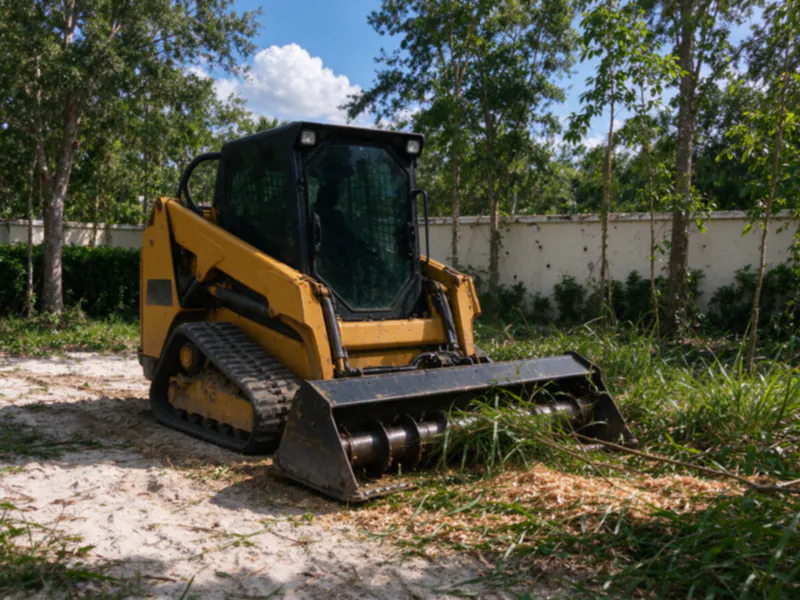
A mow-down suits a lot that was mowed within the last few years: grass, weeds and soft brush cut low with a rotary cutter or mower. It is quick, and in the rainy season it grows back fast. Brush clearing covers the tools.
A clean-out suits a lot left for years. Vines and brush come down, saplings below permit size are cut or mulched, dumped debris is pulled out and loaded, and the lot is left level and mowable. Roots stay, so palmetto and Brazilian pepper come back from the edges first. On a lot being developed, Palm Bay requires Class I invasives such as Brazilian pepper to be removed before the certificate of occupancy, so a pepper-choked lot headed for building is better handled as part of the clearing.
Clearing for building is a different job, done with the permits and the house plan. If you plan to build or sell to a builder soon, clearing once with the lot clearing scope saves paying for a cleanup now and a clear later.
Debris, fire and keeping it clean
Everything that comes off an overgrown lot goes somewhere. The cut growth is mulched in place, chipped or hauled, and junk goes with it to a disposal site that will take it. Leaving piles on the lot does not answer a notice, and piles of dry brush are a fire hazard. Palm Bay knows that risk: the May 2008 Mother’s Day fires began as a brush fire in southwest Palm Bay and destroyed 33 homes, and in April 2026 brush fires burned about 130 acres of undeveloped land in southwest Palm Bay. Burning the debris on a platted lot is rarely possible under state setback rules, as the burning debris guide explains, so it is hauled.
There is no published price band for overgrown lot work. The price follows how tall and woody the growth is, how much debris is hidden in it, access from the street, and the haul. Once cleared, the lot stays compliant only with follow-up cutting; the after land clearing guide covers what keeps a lot from going back to brush.
What an overgrown lot clearing scope includes
- A walk of the lot, or a review of your photos first, to see what is growing and what is hidden in it
- A check of the notice, if there is one, so the scope matches what the city asked for
- Burrows, trees of permit size and any neighbor's fence or shed at the line marked before work
- Tall grass, vines, brush and saplings mowed, mulched or cut to the agreed height
- Dumped yard waste, tires and junk pulled out of the growth and loaded for disposal
- Debris hauled off rather than left in piles on the lot
- A hand-off walk of the finished lot against the scope
Three ways to deal with an overgrown lot
| Mow-down | Clean-out | Clear for building | |
|---|---|---|---|
| What it does | Cuts grass, weeds and soft brush low across the lot | Mows or mulches the growth and removes dumped debris and saplings | Removes trees in the building areas and grubs out roots |
| What stays | Trees, stumps, roots | Trees of permit size, stumps, roots | Kept trees only |
| City permit | Usually none for mowing; confirm per address | Depends on trees and area; confirm per address | Tree removal and land clearing permit, with the building permit under review |
| Comes back | Fast in the rainy season | Within a season; edges first | Grubbed areas stay open until building |
| Best fit | A lot mowed in recent years | A lot left for years, or a code notice | A lot about to be built on |
A code notice asks for a cleaned-up lot, not a cleared one. Clearing beyond that brings in the city's tree and land clearing permit.