Last Updated:
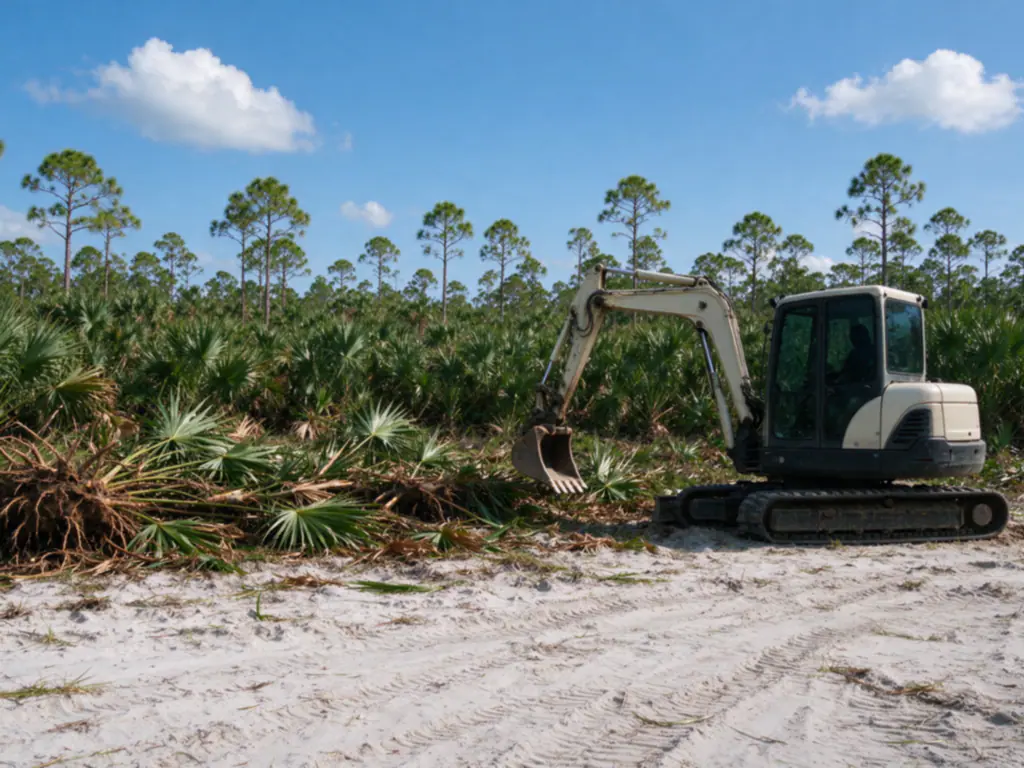
Flatwood Land Clearing Palm Bay handles saw palmetto removal in Palm Bay and across south Brevard, from a few clumps in a back yard to a lot carpeted in palmetto under the pines. Saw palmetto removal is different from cutting brush: the plant grows from trunks that creep along and just under the sand, so a stand only goes away when those trunks and their roots come out. On most Palm Bay lots that is the hardest part of clearing, and it is the part where the method, and the plan for a lot of sandy root debris, decides the price. The work is carried out by licensed and insured contractors.
What happens on the first visit
The visit splits the palmetto into two kinds of ground. Where something will be built or a lawn will be laid, the trunks and roots have to come out. Where the lot stays natural, at a back line, along a canal easement or under pines you keep, palmetto can stay and be mowed back. Most owners find they need roots out on less of the lot than they expected, which saves money.
The walk looks for gopher tortoise burrows, which are common in the open sand between palmetto clumps. FWC requires a relocation permit before any work within 25 feet of a burrow, and digging out palmetto is exactly that kind of work. It checks how wet the ground is, since much of Palm Bay sits on flatwoods sand with the water table close to the surface in summer. And it notes the trees you are keeping, because a kept tree’s critical root zone is off limits to machines under Palm Bay’s code, and palmetto growing inside it is cut by hand rather than dug.
Why palmetto comes back: the trunk in the sand
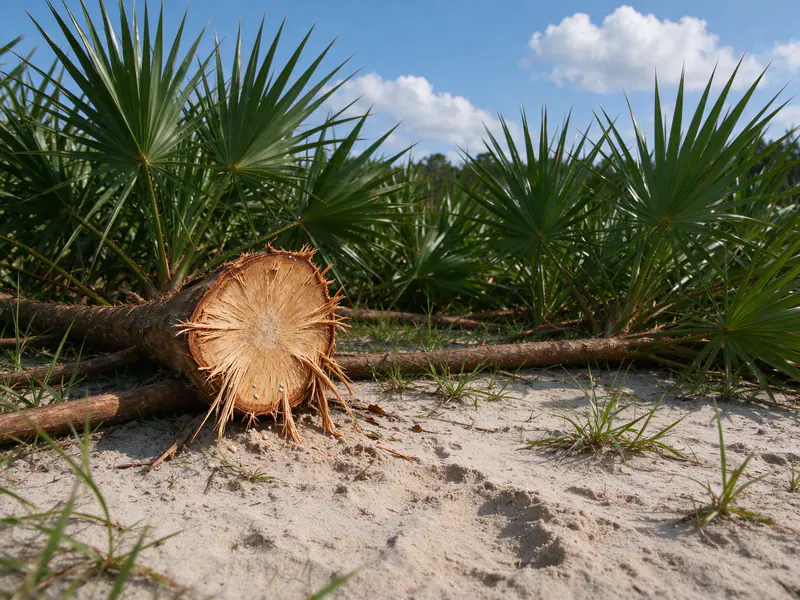
Saw palmetto, Serenoa repens, is a native Florida palm, and its trunk mostly lies down. It creeps along the surface or just under the sand, branching and rooting as it goes, and owners call the exposed trunks “gator backs” for good reason. The fan-shaped fronds grow from the tips, and a clump is long-lived and keeps spreading outward.
That growth habit is why the usual tools fail. A bush hog, a string trimmer or a forestry mulcher takes off the fronds and leaves the trunks, and the buds along them resprout. A mulched palmetto patch is usually green again within a season. The trunks themselves are tough and fibrous. Homeowners report palmetto roots being very hard to dig or cut by hand and wearing a chainsaw chain down after a few cuts, and compact tractors bouncing off mature clumps.
So the decision is not how to cut palmetto down, but where to get the trunks out and where to let it be.
Four methods and when each fits
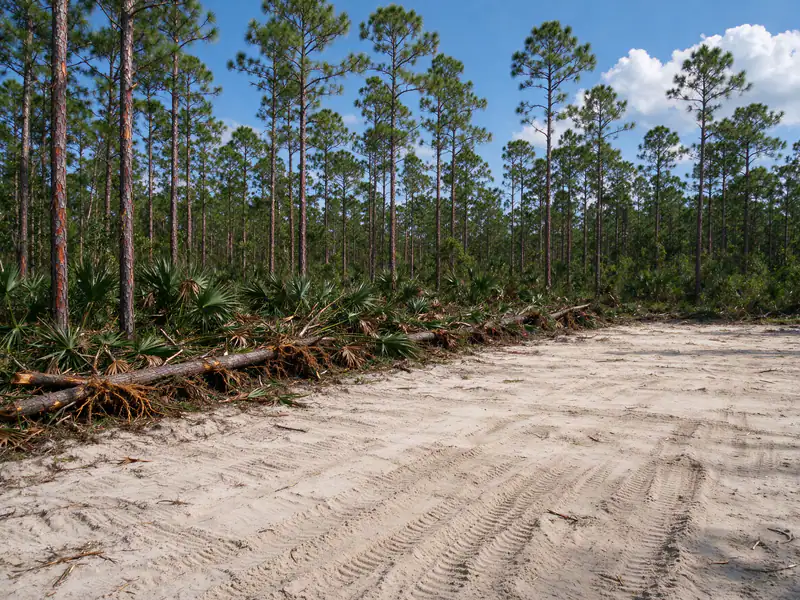
Root raking. A rake of long steel tines on a wheel loader, track loader or dozer is driven into the clump, lifts it and combs the trunks out of the sand. Owners clearing palmetto in central Florida describe a loader with a root rake doing better than a dozer blade, because the tines let sand fall through instead of pushing it into the pile. It is the efficient choice for larger open areas such as a house pad, a yard or acreage.
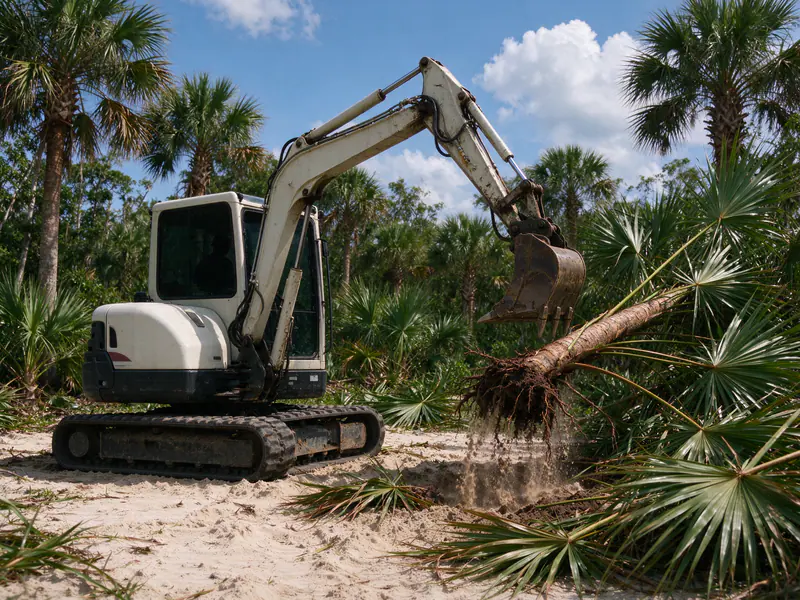
Grubbing with a bucket. An excavator or mini excavator digs under the clump and lifts it out whole. It is thorough and precise, good for big single clumps, tight spots near a fence and the edge of a kept tree’s root zone, but it brings a lot of sand up with the roots unless the operator shakes the bucket out.
Grinding below grade. A stump grinder or mulcher run down into the trunks chews them to chips in place. It works for a few clumps in a future lawn and avoids hauling, but it is slow over a whole pad.
Mowing or mulching the tops. Right for the parts of the lot staying natural. It keeps palmetto low and the lot looking tended, and it has to be repeated as the stand recovers. The forestry mulching vs bush hogging guide compares the two.
On a building lot the pad, driveway and drainfield get raked or grubbed, which is part of clearing and grubbing, and the edges get mowed. The clearing vs grubbing guide explains why roots under fill cause trouble later.
Palmetto across the whole lot?
Send a few phone photos and where the house, drive and septic will go. The scope marks where roots must come out and where they can stay.
The sand problem: weight, burning and wet months
Palmetto root debris is heavy because it is full of sand. A clump lifted out of Palm Bay’s fine sand carries a large share of its weight in grains caught among the roots, and haul-off and disposal are priced by the load. Shaking the roots out, raking rather than digging where possible, and letting windrows dry before loading all bring the weight down. The debris hauling page explains how loads are priced.
The same sand keeps a pile from burning well. Owners burning palmetto describe having to stack, dry, burn, sift out the sand and repeat. In Palm Bay burning is rarely available anyway: the Florida Forest Service requires authorization for land clearing piles and keeps them at least 300 feet from any occupied building, which a platted lot in a neighborhood cannot meet.
Season matters too. In EauGallie sand, Palm Bay’s most common soil, the wet layer sits about 12 inches down from June through November and drops to about four feet by April and May, per the USDA soil survey. Grubbing in saturated sand is slower, messier and harder on the ground. The drier spring months are the easiest time to pull palmetto, as the best time to clear land guide explains.
Keeping some palmetto on purpose
Saw palmetto is not a weed. UF/IFAS Extension describes it as a native plant that feeds wildlife and pollinators, and it holds sandy soil in place with no water or care. Gopher tortoises dig among palmetto on open sand, and parts of Palm Bay are mapped scrub-jay habitat, where the city’s federal permit limits clearing in nesting season; the window is confirmed with the city.
A band left along the back or side line works as a free screen and wildlife strip. Kept palmetto needs mowing back where it creeps toward the lawn, and it should not be left in a house pad or drainfield. The after land clearing guide covers keeping edges in check, and brush clearing handles the routine cut-back.
There is no published price band for palmetto on its own. Root mass is a cost driver within lot clearing: a lot carpeted in mature palmetto sits at the top of the clearing range, and a scattered stand sits lower.
What a saw palmetto removal scope includes
- A walk of the palmetto to map where roots must come out and where the stand can stay or be mowed
- A burrow check, since tortoises dig among palmetto on open sand
- A written scope naming the method for each area and where the root debris goes
- Trunks and roots root-raked or grubbed out of building areas, with sand shaken loose
- Palmetto mowed or mulched back in areas staying natural
- Root debris windrowed, loaded and hauled, or handled as the scope sets
- A hand-off walk of the cleared ground, with a note on edge regrowth
Four ways to deal with saw palmetto
| Mow or mulch the tops | Root rake | Grub with a bucket | Grind below grade | |
|---|---|---|---|---|
| What comes out | Fans and stems only | Trunks and most roots, combed out | Trunks, roots and the clump's base | Trunks ground to chips in place |
| Sand in the debris | None | Less; the tines let sand fall through | A lot, unless shaken out | None hauled; chips stay |
| Regrowth | Green again within a season | Little, if the trunks are out | Little | Little where ground deep enough |
| Best fit | Edges and woods you keep | Larger open areas: pad, yard, acreage | Tight spots and big single clumps | A few clumps in a lawn area |
| Ground left | Mulch or stubble over sand | Loosened sand, ready to level | Holes to fill and level | Chips mixed into sand |
On a house lot, root raking or grubbing does the pad, driveway and septic area; the wooded edges are usually mowed back instead.